Last Updated on August 29, 2026
Estimated reading time: 4 minutes
Author: TLS TEAM
What Is Foreclosure Auction Investing?
Foreclosure auction investing means buying homes sold at public auctions by lenders or local governments after missed mortgage payments or unpaid property taxes, with investors looking for properties they can buy below market value while accounting for title problems, hidden repairs, and occupant issues. Investors place bids at the auction, often in person or online.
Table of contents
Key Takeaways
- Foreclosure auction investing involves purchasing properties sold by lenders or local governments after mortgage or tax defaults.
- Investors bid at public sales, either in person on courthouse steps or online through platforms like Auction.com.
- Properties go to auction due to missed mortgage payments or unpaid property taxes, typically aimed at buying below market value.
- While foreclosure auctions can yield significant discounts, they come with high risks that buyers should be aware of.
- It’s essential to verify property titles and be cautious of potential issues when attending a foreclosure auction.
How Foreclosure Auctions Work
Investors bid on these properties at public sales, which take place in a set order. First, the auction date is announced. Then bidders register. When the sale opens, bidding starts with an opening bid. The highest bidder wins, and the buyer usually has to pay according to the auction’s rules. These sales can take place:
- In person — often on courthouse steps
- Online — through platforms like Auction.com
The goal is typically to acquire homes below market value for use as rentals or flips.
Why Properties Go to Auction
These sales usually happen after a borrower misses mortgage payments or when taxes go unpaid, which pushes the property into public sale.
| Trigger | Who Initiates the Sale |
|---|---|
| Missed mortgage payments | Lender (bank) |
| Unpaid property taxes | Local government |
Quick Reference
A foreclosure auction is a public sale of real estate after a mortgage or tax default.
| Term | Definition |
|---|---|
| Foreclosure auction | Public sale of real estate after a mortgage or tax default |
| Mortgage foreclosure | Sale triggered by missed loan payments |
| Tax foreclosure | Sale triggered by unpaid property taxes |
| Below-market purchase | Buying at a discount, typically for rental or resale (flip) |
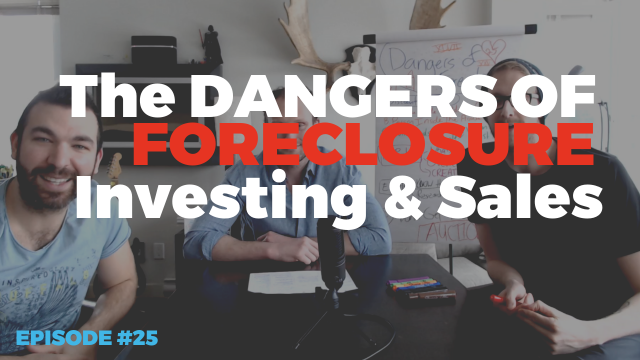
In This Episode We Talk About:
– The Dangers that can come up at a foreclosure auction…
– What specifically should you watch out for when you attend a foreclosure sale…
– Why it’s important to know exactly what the title says…
– What to do if there’s someone in your property!! 
You can also Subscribe and Listen on Both Itunes Podcasts and Stitcher Here:


Tune Into Today’s Episode for a classic Wholesale Daily show with Dustin, Josh, and Cory!
Frequently Asked Questions
Either a lender (when a homeowner defaults on their mortgage) or a local government (when a homeowner fails to pay property taxes).
They can happen in person, often on courthouse steps, or online through platforms such as Auction.com.
To purchase properties below market value, typically for rental income or resale after renovation (flipping).