Last Updated on August 1, 2026
Estimated reading time: 6 minutes
Author: Jessa May Bautista
Reviewed by: Josh Blanchard
Fact Checked by: Jack Aldous
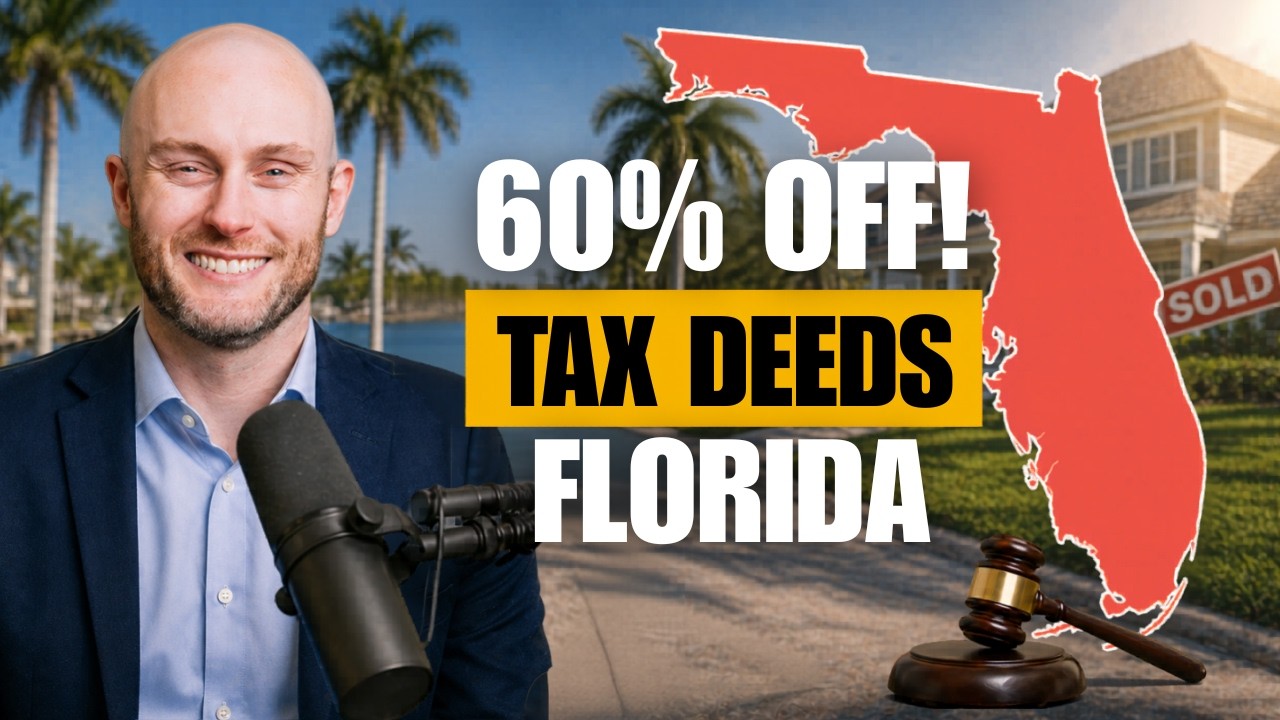
Can you really buy a house in Florida for up to 60% off, without a mortgage, without traveling, and without needing perfect credit? The answer is yes. It’s called a Florida tax deed, and it’s one of the most overlooked ways to get into real estate investing today.
A viewer on one of my live streams proved it. A property at 3050 Buista Drive sold at a Florida tax deed auction for $70,000. It was listed on Zillow for $546,000. That’s a real deal. Public record. Look it up.
Table of contents
Key Takeaways
- You can buy Florida tax deeds for up to 60% off, without a mortgage or perfect credit.
- Tax deeds sell properties when homeowners fail to pay taxes, eliminating existing mortgages.
- To purchase Florida tax deeds, choose a county, find the auction, register, research properties, and bid.
- Beware of risks like code violations, flood zones, and bad titles; always research before bidding.
- Florida tax deeds are accessible online, making it possible for out-of-state and international buyers to participate.
What Is a Tax Deed?
A tax deed is a county legal document that gives the county title to a property when real estate taxes stay unpaid long enough. After that, the county sells the property to recover the unpaid taxes.
What Are Florida Tax Deeds?
In Florida, if a homeowner stops paying property taxes, the government will eventually auction off that property to recover the money owed. This is called a tax deed sale.
When the property sells, it wipes out the existing mortgage. That means you can pick up real estate at a massive discount, sometimes 60%, 70%, or even 80% below market value.
Florida Tax Liens vs. Tax Deeds: What’s the Difference?
Florida is one of the only states that does both tax liens and tax deeds. Here’s a simple breakdown:
| Feature | Tax Lien | Tax Deed |
| What you buy | A lien on the property | The property itself |
| Interest rate | Up to 18% | N/A |
| Hands-off? | Yes, mostly | Requires research |
| Recommended for Florida? | Not really | Yes |
| Redemption period? | Yes (3–5 years) | No |
Bottom line: I don’t recommend Florida for tax liens. If the lien doesn’t redeem, the county rolls it to the deed sale anyway, and you still don’t get to foreclose yourself. Stick to tax deeds in Florida.
How to Buy Florida Tax Deeds: Step-by-Step
You don’t need a lawyer. You don’t need to travel. Here’s how to get started:
- Pick a county.
Start small. Avoid Miami, Tampa, and other high-competition areas. Look inland at smaller, less-hyped counties.
- Find the auction.
Search “[county name] tax deed auction” on Google. Most auctions happen online, often on Wednesdays.
- Register to bid.
Call the county, ask what ID and payment they need, and register.
- Research the property.
Check public records for liens, code violations, flood zones, and land access.
- Bid and win.
If you win, file your deed, and you can sell, rent, or move in; no redemption period in Florida.
What Are the Risks?
This is where a lot of beginners go wrong. Here are the main dangers to watch out for:
| Risk | What It Means |
| Code violations | City/county fines that survive the tax deed sale |
| Grass cutting liens | Can stack up to $10,000–$50,000 over years |
| Flood zones | Never buy in a swamp, even if it looks good on Google |
| Landlocked lots | No road access = nearly worthless |
| Unpaid HOA dues | May survive the sale and become your problem |
| Bad title | You may need to clear title after purchase (~$2,000 extra) |
Pro tip: Always check the FEMA flood map before bidding on any Florida property. If it’s in a floodplain, pass, no matter how low the price is.
How Much Money Do You Need?
Here’s the honest breakdown:
- $200–$1,000: You can buy over-the-counter tax deeds (leftover lots that didn’t sell at auction)
- $5,000–$10,000: You can start bidding on small lots and vacant land
- $10,000–$50,000: The sweet spot for most beginners; buy, flip, and build momentum
- $50,000+: At this level, you can also start looking at tax liens for passive income
You do not need a mortgage or perfect credit. You just need cash ready to go on auction day.
Can You Do This From Outside Florida?
Yes, 100%. Most Florida tax deed auctions are online. Out-of-state and even international buyers participate every week. All you need to do is:
- Find the county’s online auction platform
- Register ahead of time
- Hire someone local (or use Google Street View + maps) to scope the property
Is This Ethical?
This is a fair question. By the time a property hits the tax deed sale, the homeowner has received years of notices and chances to catch up. Most of the time, they’ve already left.
About 20% of the time, someone is still living there. In that case, approach them with empathy. Offer “cash for keys”, maybe $500 up front and $500 when they move out. Also let them know about any surplus funds they may be owed. If a $200,000 house sold for $50,000 and the opening bid was $10,000, that $40,000 difference belongs to the original homeowner.
Frequently Asked Questions (FAQ)
No. Once you win the tax deed, you file it and can move forward immediately. There’s no waiting period.
Not always. For properties under $10,000, a quitclaim deed is usually fine. For anything over $10,000, budget around $2,000 to clear the title using a service like Tax Title Services.
Pretty much every week somewhere in the state. Some counties hold auctions monthly; others more frequently.
Tax deeds. Under $50,000, tax deeds give you faster returns. You can buy, flip, and reinvest quickly. Save tax liens for later when you have more capital.
You made the mistake before you bid. Always check public records, FEMA maps, and satellite images first. If it happens, try selling to a neighbor or donating it for a tax deduction.
Yes. Online auctions are open to international buyers. Just confirm payment methods accepted by the county.
Sometimes they get wiped out, sometimes they survive. Always research HOA status before bidding. If you’re flipping, you can often pay past dues at closing instead of out of pocket upfront.
Final Thoughts
Florida tax deeds are real. The deals are real. And you don’t need to be rich or experienced to get started. You just need to do your homework.
Start with smaller counties. Check public records. Avoid floods and landlocked lots. Budget for title clearing. And don’t let skepticism stop you; one viewer paid $1,000 for land and built a house on it.
That’s the power of Florida tax deeds.